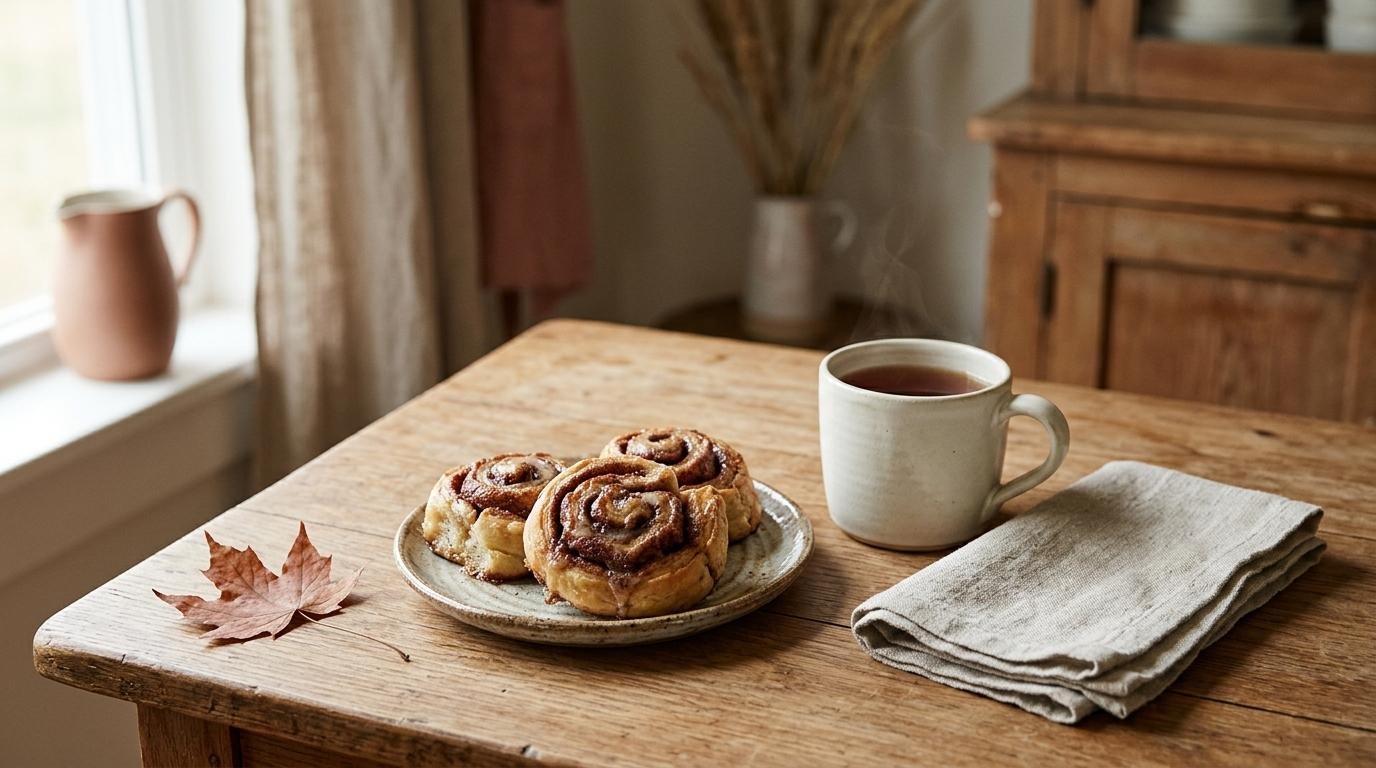
A fall weekend reset doesn’t need to be an overstuffed Sunday checklist. Keep one quiet anchor, one comforting activity, real rest, and perhaps one small chore that would make Monday easier. That can be enough structure for a weekend to feel like yours again.
After a stretch of sleepless nights, I wanted my weekend to be simple. Saturday dinner out with my parents was already planned; beyond that, I mostly relaxed, caught up on my shows, went to church, baked cinnamon rolls, and did a few chores. Nothing about it was impressive. It was exactly the kind of ordinary weekend I needed.
There’s no formula here that guarantees better sleep or fixes a hard week. The time windows below are suggestions for a slower weekend, not a schedule you have to follow.
Key Takeaways
The NIMH’s self-care guidance emphasizes that the right activity differs by person; a 2021 review of work-detachment interventions supports stepping away, not any one weekend formula.
Start slowly: five to ten minutes with coffee or tea can be enough.
Choose one warm activity: baking is one option; a smaller version is fine.
Let familiar shows count: pick what to watch before you sit down.
Keep one quiet anchor: church, a walk, a call, or a regular meal.
Contain chores: one or two tasks, with a 10–15-minute boundary if useful.
A Fall Weekend Reset Is Not Another Productivity Project
The word reset can make a weekend sound like a renovation: deep-clean the house, plan every meal, catch up on messages, and return to Monday as a new person. That’s a lot to ask of two days, especially after poor sleep or a demanding week. A reset can be smaller: a few moments that help you feel settled, with chores kept in their place.
A 2021 meta-analysis of interventions designed to improve psychological detachment from work found that those interventions helped people disengage from work-related thoughts on average. The meta-analysis by Karabinski and colleagues did not test cinnamon-roll baking, church, television, or any particular weekend routine. It offers narrower support for making room to step away from work, rather than using every off-hour to finish more tasks.
That distinction matters. A weekend can contain a dinner, a show, a faith practice, a warm activity, and a little preparation without becoming a self-improvement assignment. The point isn’t to make the weekend impressive. It’s to have enough quiet and choice that it feels like a break.
Let the Morning Start Slowly
A slow start doesn’t require sleeping in until noon or following a long routine. It can mean sitting down with coffee or tea before picking up your phone. If you want a specific starting point, try five or ten minutes with the mug in your hands and no immediate task. If that feels like too much after a rough night, make it smaller: take a few sips while seated before checking messages.
A quiet morning isn’t a replacement for sleep. The Centers for Disease Control and Prevention’s sleep guidance gives age-specific recommendations; adults ages 18–60 are generally advised to get at least seven hours a night. One weekend ritual won’t solve ongoing sleep trouble, and you don’t have to force an early start to make the day count. If sleepless nights continue, consider talking with a health professional.
There’s a realistic hurdle here: maybe the household is already awake, the coffee is cooling, or you have somewhere to be. A slow start can still be two unhurried minutes before you open the day’s messages. The important part is not the exact duration, it’s beginning without turning the first moment into another performance.
Choose One Warm, Hands-On Ritual

Baking was the cozy activity I chose that weekend. I’m a little addicted to cinnamon rolls. Measuring, stirring, waiting for the dough, and smelling cinnamon fill the process with small moments to notice. It doesn’t need to be a perfect batch or an elaborate baking day to feel like a hands-on ritual.
If you want to try something similar, choose an activity that fits the energy you actually have. Give yourself a 30-minute active window for mixing or preparing, and let the dough rest while you do something else if your recipe requires it. If that sounds like more than you want to manage, use a simpler dough or choose a different ritual: simmer soup, arrange flowers, or light a candle while tidying one shelf.
The National Institute of Mental Health’s self-care guidance includes relaxing activities and low-stress hobbies as possibilities. That doesn’t mean baking is a treatment or that everyone finds it relaxing. If the kitchen is already messy or you’re short on energy, a warm drink and a quiet seat may be the better version today.
Let Comfort Shows Count as Rest

Catching up on shows was part of the weekend I described, and I didn’t treat it as a guilty pleasure. Rest doesn’t have to produce a cleaner kitchen, a finished list, or a measurable result. The National Institute of Mental Health includes enjoyable relaxing activities and low-stress hobbies among possible self-care choices; a comfort show can be one option, if it actually feels restful to you.
A small practical step: choose what you’ll watch before you sit down. That way you can spend the first half hour enjoying the episode instead of scrolling through a menu of choices. Set up a cozy spot with a blanket and a snack if that sounds good. If the screen leaves you feeling more wired than rested, switch to a familiar episode, music, or another quiet activity without turning the choice into a judgment about yourself.
Keep One Quiet Anchor
For me, church was the quiet anchor that weekend. For someone else it might be a walk, a phone call with a person they love, or a regular meal at home. An anchor gives the weekend a little shape without turning it into a strict schedule.
Choose one thing you’d be glad to protect if the rest of the weekend shifts. It doesn’t need to take long. A 20-minute walk, a conversation over lunch, or a few quiet minutes before bed can be enough to give a busy day a center. The NIMH’s guidance stresses that self-care looks different for each person, so your anchor can be ordinary and personal rather than something copied from a checklist.
The realistic hurdle is that even a meaningful plan can start to feel like an obligation if it’s too elaborate. Keep the anchor small enough that you can still choose it on a lower-energy day. If the day changes, move the moment or shorten it; you don’t have to protect the exact schedule to keep what matters.
Do One Small Reset Chore
Chores happened too in the weekend I described. The trick is keeping them small: one load of laundry, wiping the counters, or setting out what you need for tomorrow. A tidier space can make Monday feel lighter, but it doesn’t require a full-house clean to count.
Choose the one task you’d feel relieved to have finished by Sunday night. Set a 10- or 15-minute timer if that helps you put a boundary around it. When the timer ends, stop or decide deliberately whether you have energy for one more small task. Don’t let “I’ll just do the next thing” quietly turn into a day of chores.
If the chore is bigger than expected, break it into a next step. “Start one load of laundry” is a contained task; “get the whole house in order” isn’t. And if you’re still tired, it’s okay to skip the chore. The purpose is to support the weekend, not to earn the right to rest.
A Sample Fall Weekend Reset You Can Adjust
Use this as a menu, not a timetable. The hours will depend on sleep, family plans, work, and how much energy you have.
Saturday morning: Take five to ten minutes to sit with coffee or tea before opening your phone. If you have a plan later, keep the slow start brief rather than dropping it entirely.
Saturday afternoon or evening: Make one comforting activity the center of the day. In my actual weekend, dinner out with my parents was the one planned event on Saturday. Church, cinnamon rolls, familiar shows, and a few chores fit around that without a packed timetable.
Sunday: Keep one quiet anchor, such as church, a walk, a call, or a meal. If it would make Monday easier, add one 10- to 15-minute chore block, then leave the rest open.
If a night of sleep was rough, lower the plan rather than trying to “make up” for it with a perfect reset. Keep the warm drink, the show, or the anchor; let the chore wait. A useful routine has room for the weekend you actually have.
What is a weekend reset?
A weekend reset is a small mix of rest, one or two comforting activities, and a limited amount of preparation that helps the next week feel less abrupt. It doesn’t require a clean house or a long checklist. The NIMH’s self-care guidance emphasizes finding activities that suit you and that you enjoy.
How do I make my weekend restful when I have chores?
Pick one or two chores that will make a noticeable difference, then contain them in short blocks. A 10- or 15-minute timer can help you stop before the list expands. Keep rest on the plan too; you don’t have to finish every task first.
How do I stop feeling guilty about resting?
Try treating rest as part of the weekend rather than a reward for completing it. Choose a specific, low-pressure pause, a show, a cup of tea, or a few minutes of quiet and let it count without asking it to be productive. If guilt appears, notice it and return to the choice you made.
A Weekend Doesn’t Need to Be Full to Be Good
Some of the best weekends are slow, warm, and a little ordinary. Mine included time with my parents, church, cinnamon rolls, familiar shows, and a few chores. Nothing about it was impressive, and that was exactly why it felt right after several sleepless nights.
If you want to try a reset this weekend, choose one small ritual you’d be glad to protect and one task you’d be relieved to finish. Leave space around both. You can bake, take a walk, watch a show, or simply sit down with your tea. A gentle weekend is not a prize for getting everything done; it’s a way to make room for the life you’re already living.
