A Week in My Life: Building a Soft, Slow Work From Home Routine
A good work from home routine does not need to turn your day into a military operation. It needs a few dependable anchors: a gentle way to begin, protected time to pause, enough quiet to focus, and a clear signal that work is over.
There is a version of working from home that gets romanticized online—slow mornings, oat milk lattes, perfect desk setups. Then there is the real version, which is quieter and less polished, but still soft in its own way. The goal is not to make every hour aesthetic or productive. It is to build a day that supports your energy instead of constantly asking more from it.
This is what my week looks like: not perfect, not identical every day, but intentional. The structure gives me somewhere to return to when the day starts to blur, while the flexibility keeps the routine from becoming another source of pressure.
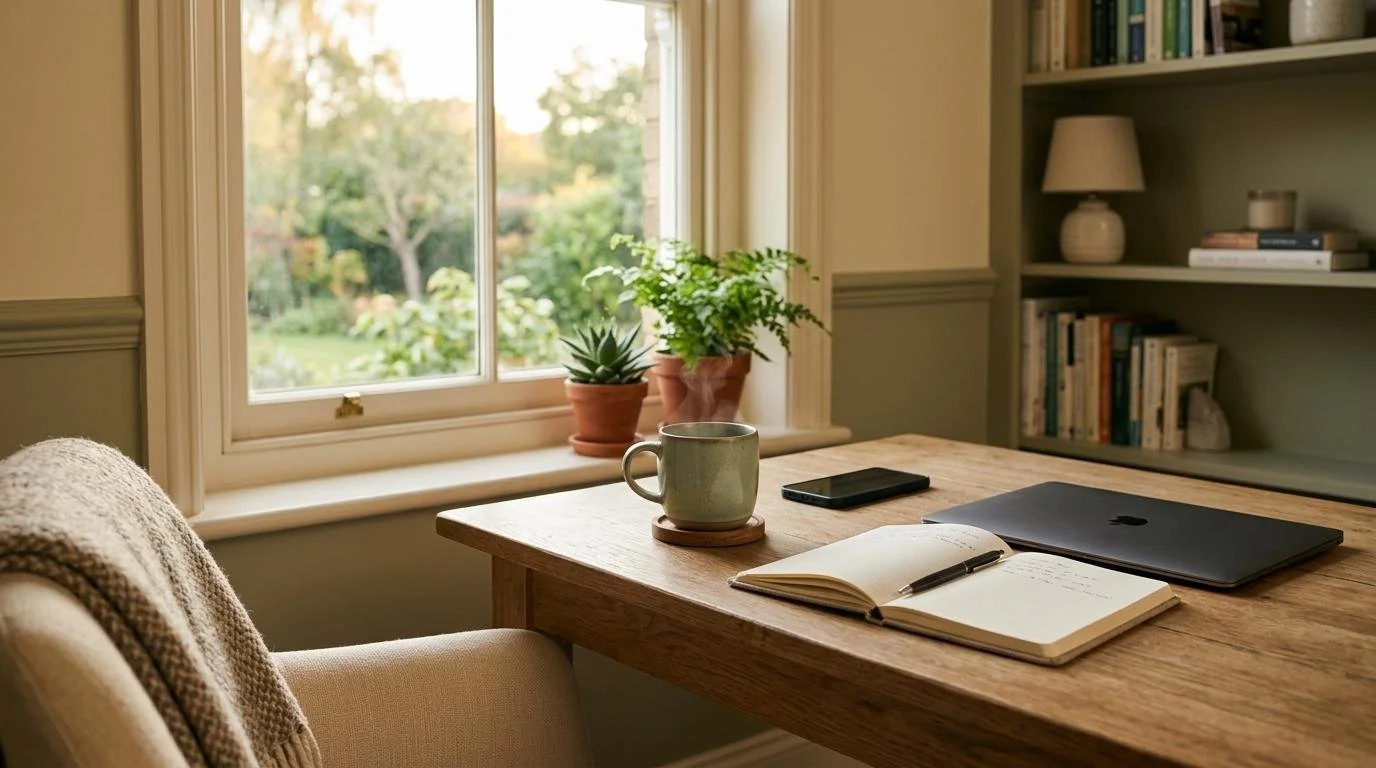
The anchors that make this routine work
Start before you scroll: Use movement, breakfast, or getting dressed as a gentle transition into work.
Protect one real break: Schedule lunch or a ten-minute pause before the day has a chance to consume it.
Use quiet on purpose: Reserve your clearest hours for focused work instead of filling every gap with messages.
Close the loop: Reset your desk, mute notifications, and leave the workspace at a defined stopping point.
How My Work From Home Routine Begins: Moving Before I Open My Laptop
My mornings start with movement, not my phone. I exercise first thing before checking a single notification then shower, and only after that make coffee. By the time I sit down to work, I have already done something for myself. That changes the tone of the day.
Without a commute, it is easy to wake up and move directly from bed to inbox. There is no physical distance between personal time and work time, so I create a small transition on purpose. Exercise is mine, but it does not have to be yours. A short walk, stretching, making breakfast without scrolling, or opening the curtains and getting dressed can do the same job.
If you are wondering how to structure your day working from home, start with a beginning cue rather than a perfect schedule. Pick one action that tells your brain, “The day is starting now.” Keep it simple enough that you can repeat it on an ordinary Tuesday, not just on your most motivated morning.
The important part is not waking up early or completing an impressive workout. It is giving yourself a few minutes before other people’s messages and priorities enter the room. Your first attention of the day does not have to belong to your phone.
Midday: Protecting Breaks Like They’re Non-Negotiable
One thing WFH life can do very easily is blur every boundary. There is no coworker physically leaving for lunch, no walk between meeting rooms, and no commute reminding you that you have been sitting for hours. If I leave breaks to chance, they disappear.
That is why lunch happens at a set time, and so do my breaks. I try to walk during them. Some days that means going outside; other days it means using a walking pad so movement does not have to become a major production. The point is not to make wellness another task to perform. It is to interrupt the feeling that the entire day is one long stretch of screen time.
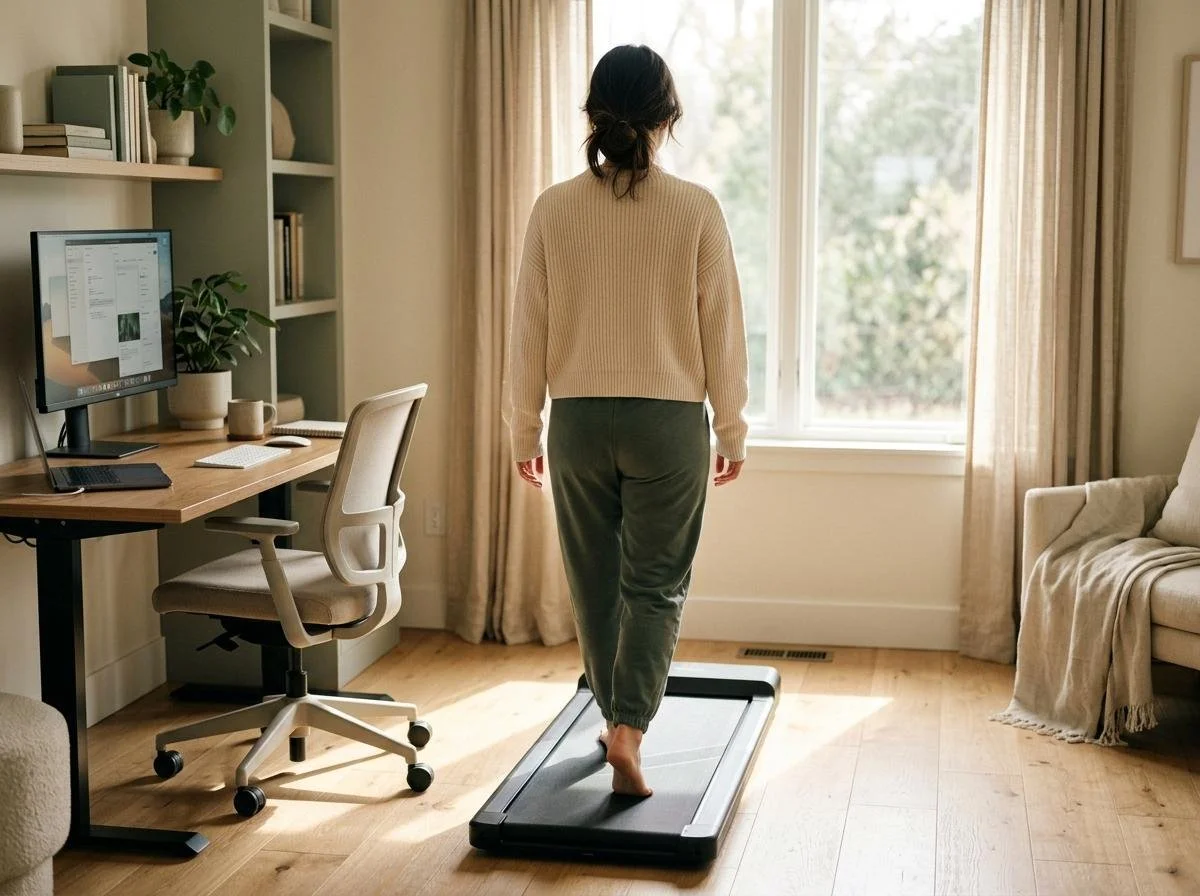
A break can be small:
Eat lunch away from your desk.
Stand up and refill your water.
Look at something farther away than your screen.
Stretch for two minutes between calls.
Step outside, even if you only walk to the end of the block.
If a scheduled lunch feels too rigid, protect one ten-minute break first. Put it on your calendar like a meeting and treat it as real. People often wait until they feel tired enough to deserve a break, but by then the break has become recovery instead of prevention.
The Reddit discussion that inspired part of this approach was full of people describing the same problem in different words: blended days, screen fatigue, and the need for a hard pause. A protected break is a small boundary, but small boundaries are often what keep a flexible day from becoming an endless one.
Afternoon: Quiet Focus, Small Wins
I like quiet. My afternoons are built around long, uninterrupted focus blocks—no background noise, no unnecessary multitasking, and as few open loops as possible. For an introvert, the quiet in a work from home day can be a real advantage. It does not need to be filled just because an office would have been louder.
I also follow a simple rule for small tasks: if something will take less than five minutes, I do it immediately instead of letting it pile up on a list. This is not a command to interrupt deep work every few minutes. It is for the tiny tasks that are already in front of me and can be closed without creating a new project.
A realistic introvert work from home schedule might look like this:
Morning: movement, coffee, and the day’s most important task before messages take over.
Late morning: meetings or collaborative work, grouped where possible.
Midday: lunch away from the desk and a real movement break.
Early afternoon: one quiet focus block for writing, planning, or problem-solving.
Late afternoon: lighter admin, follow-ups, and tomorrow’s first priority.
End of day: shut down at a defined time rather than waiting until everything is finished.
The exact hours can change. The order can change. What matters is matching demanding work to the part of the day when your mind is most available, instead of assuming every hour has the same energy.
How to Avoid Burnout Working From Home: No Big Ritual, Just a Clear Stopping Point
I do not have an elaborate wind-down routine, and I used to think that meant I was doing something wrong. What I do have is a clear way of closing the day: I set up my desk for tomorrow before I log off. Sometimes I tidy the kitchen too—nothing deep, just enough that the space feels reset.
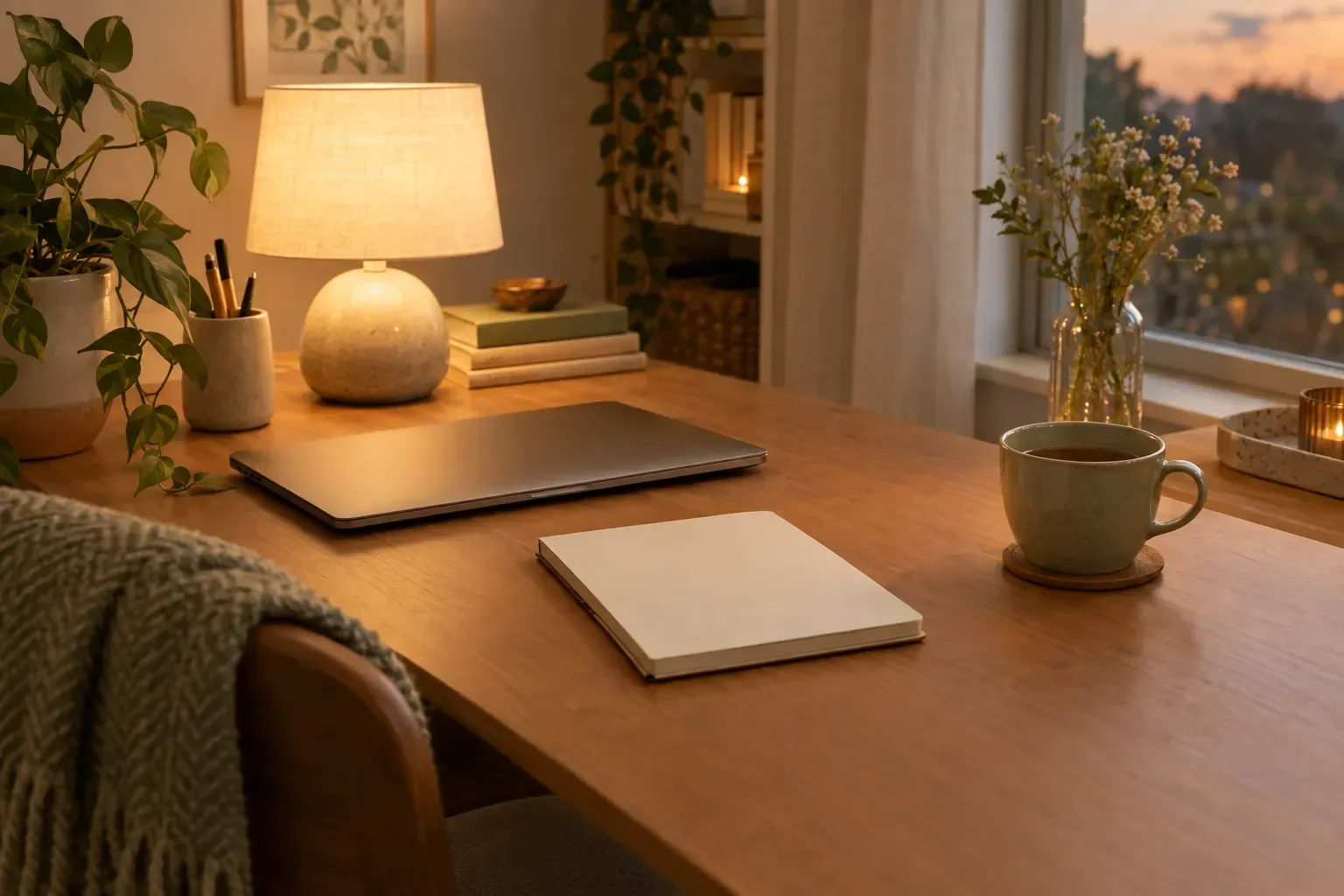
This small habit helps because tomorrow-me is not starting from a pile of unfinished visual noise. I might put away a notebook, plug in my laptop, or write down the first task I want to begin. Then I shut the laptop and leave the workspace.
When home is also your office, “work is over” will not always happen naturally. You may need to create the signal yourself. It could be changing clothes, taking a short walk, turning off work notifications, or physically closing a door. One person in the remote-work discussion described leaving the room and shutting down the laptop as more useful than any complicated productivity system.
This is one of the simplest ways to think about how to avoid burnout working from home: do not make yourself earn the end of the day by finishing everything. Work expands easily when the office is always within reach. A stopping point protects the part of your life that exists after the screen.
What I’d Tell Someone Just Starting WFH
Adjusting to working from home is harder than people expect. At first, the freedom can feel like relief. Then you realize nobody is going to tell you when to take a break, how to pace yourself, or when the day is officially done. You have to build that internal structure yourself.
The biggest shift for me was learning to work autonomously without treating every unplanned moment as a problem. A routine should help you make decisions, not remove your ability to listen to yourself. Some days need a long focus block. Some days need more space between tasks. Some days the most useful version of productivity is doing the essential work and stopping before you drain yourself completely.
I also underestimated how sedentary WFH can be. Without a commute or the small movements of an office, it is easy to barely move all day. That is why exercise and walking became meaningful anchors for me—not because I am trying to optimize every part of my life, but because movement keeps a soft, slow living work from home routine from tipping into stagnation.
On a low-energy day, use a minimum version instead of abandoning the routine entirely:
Get dressed or complete one clear start ritual.
Choose one priority that genuinely matters.
Take one real break away from the screen.
Set a stopping point before you begin.
That is enough structure to support you without pretending your capacity is the same every day.
Let Structure Make Room for Softness
None of this is about doing less for the sake of doing less. It is about being intentional with how you move through the day, so softness and productivity are not constantly fighting each other.
For your next workday, choose three anchors: one thing that helps you begin, one break you will protect, and one action that tells you the day is over. Let the rest stay flexible. A routine does not have to control your life to make it feel lighter.
Is WFH actually less stressful than office work?
Not automatically. Working from home can remove commuting and give you more control over your environment, but it can also blur work and rest. The stress changes; it does not disappear. Clear start and stop cues help make the flexibility sustainable.
How do you avoid overworking when your home is your office?
Choose an end time before the day begins, protect breaks, mute work notifications after that time, and physically leave your workspace. A desk reset can also close the loop without asking you to keep working.
What’s a realistic WFH schedule for an introvert?
Build around quiet focus blocks, grouped meetings, lunch away from the desk, and a defined stopping point. An introvert-friendly schedule does not require constant social activity; it requires enough intentional connection and enough uninterrupted time to do good work.
