Gratitude practices that actually stick are small, specific, and honest enough to leave room for what hurts. You don’t have to force a cheerful mood or fill a page with blessings; sometimes the practice is noticing one true detail and letting it be enough. The National Institute of Mental Health recommends being specific when practicing gratitude and notes that self-care looks different for everyone.
Still, gratitude advice can feel awkward when it sounds like a test: name five things, feel better, repeat tomorrow. If your day is hard, “find the good” can land like “stop feeling what you feel.” It doesn’t have to. Below are four simple gratitude exercises including a gratitude practice without journaling and a gentle way to make room for both hard feelings and small comforts
Key Takeaways
The National Institute of Mental Health recommends being specific and notes that self-care is individual; use that as permission to keep a practice flexible.
Name one real detail: “the warm patch of sun” is easier to mean than “everything is wonderful.”
Use a moment you already have: a sip of tea or a walk can be enough of a cue.
Thank someone specifically: appreciation can be private, spoken, or shared in a short message.
Let two things be true: gratitude doesn’t ask you to pretend the hard part isn’t there.
Skip the streak: you can return when a small practice feels honest again.
Why Gratitude Practices Can Feel Fake
Gratitude is not the same thing as forced gratitude. When appreciation is treated as a mood you owe the room, it can sound as if you should be thankful in a way that erases context. You can love someone and feel hurt by them. You can appreciate a quiet cup of tea and still be worried about tomorrow.
The practice itself doesn’t need to minimize any of that. In its article “Six Habits of Highly Grateful People”, Greater Good Magazine at UC Berkeley points out that gratitude doesn’t make problems or real threats disappear; noticing what supports you is different from pretending there is nothing to face. A warm meal can matter while you’re grieving. A friend’s message can be comforting while the larger situation remains unresolved.
That distinction is what keeps appreciation honest. You don’t have to find a silver lining in loss, call a painful experience a gift, or make a public post to prove you are grateful. The goal is simply to notice one real thing without using it to cancel another.
Why Gratitude Habits Fade When They Get Too Big
A gratitude habit can start to feel like another assignment when it requires a perfect time, a long list, or a particular emotion. Maybe you miss a few evenings of writing and decide you’ve fallen off. Maybe a prompt asks for “the best thing that happened today” when the honest answer is that today was mostly exhausting. A practice that leaves no room for ordinary life is hard to return to.
Research usually tests a particular activity not a universal gratitude routine. In one study summarized by its authors in Greater Good Magazine, nearly 300 adults seeking counseling were assigned to write weekly gratitude letters for three weeks, write about negative experiences, or do no writing exercise. The gratitude-letter group reported better mental-health scores at four and twelve weeks after the writing period, but the difference wasn’t immediate. That’s one intervention alongside counseling, not proof that every person needs a letter-writing schedule or should expect a quick mood change.
A more livable approach starts smaller: choose a practice you can do sincerely, and let it change shape when your week does.
1. Name One Specific Thing, Not a Whole List
The word specific does a lot of work here. “I’m grateful for my home” may be true, but it can feel distant if you’re trying to force the feeling. “The warm patch of afternoon sun on the kitchen floor gave me somewhere peaceful to sit for a minute” brings you back to an actual moment. It doesn’t have to be extraordinary to count.
The National Institute of Mental Health recommends being specific when you practice gratitude; it suggests writing an item down or replaying it in your mind. That means the practice can be one quiet sentence, not a full page of polished reflections. You might notice the soup someone left at your door, the clean towel after a shower, or the moment your shoulders finally dropped.
Try asking, What is one small thing I genuinely appreciated today? If nothing comes to mind right away, don’t scold yourself or reach for a grand answer. Let the question sit. The point is attention, not producing a convincing list on demand.
2. Notice One Small Thing in the Middle of the Day
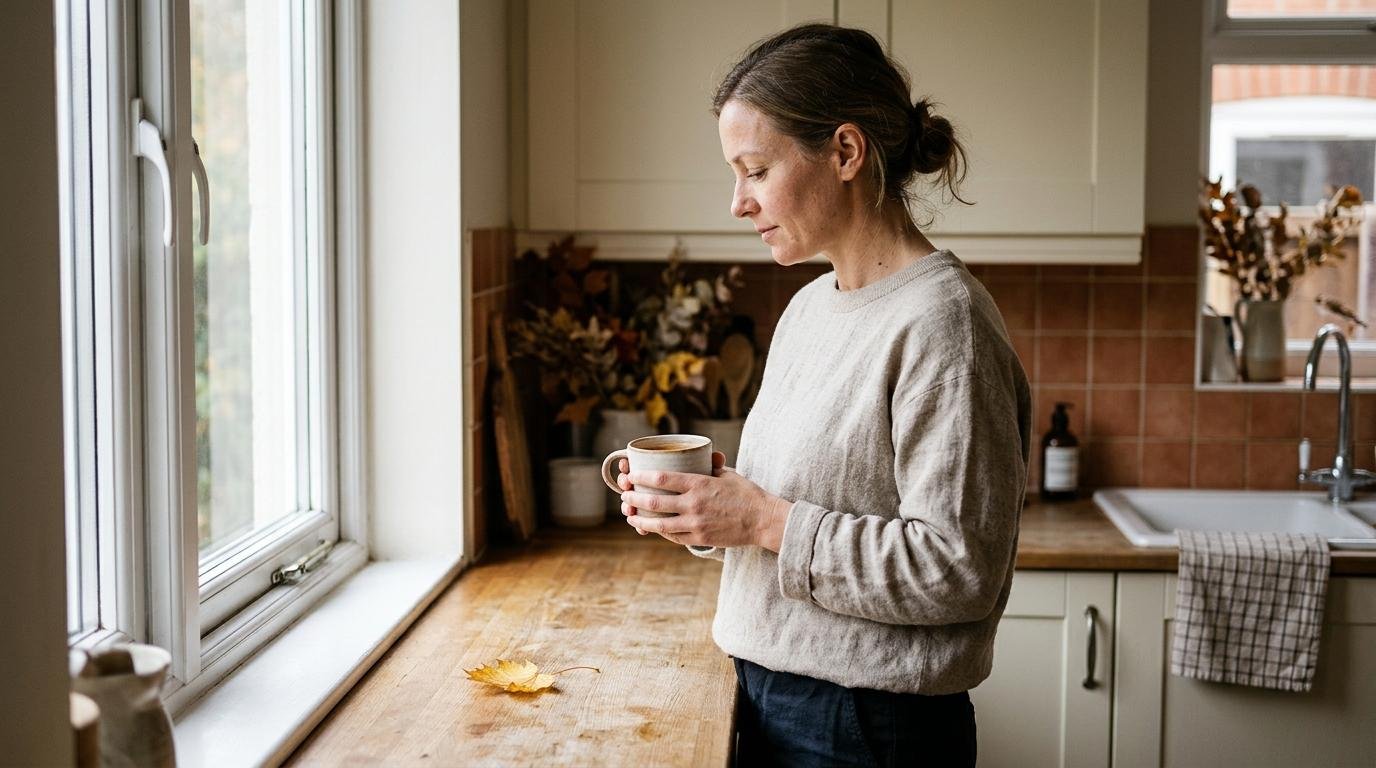
Gratitude doesn’t have to wait for a morning routine or a nighttime recap. You can practice it in the middle of an ordinary day, when something catches your attention: the first warm sip of tea, a patch of clear sky between errands, a familiar song coming on just when you needed a softer moment.
Mindful.org’s “Savor the Moment” exercise invites people to notice what they can see, hear, touch, smell, or taste as a way into appreciation. You can borrow that sensory cue without turning it into a formal meditation. Pause for one breath. Name what you noticed. Let the moment stay small instead of asking it to transform your whole day.
This kind of mindful gratitude practice can fit into a transition you already have: waiting for the kettle, walking to the car, or closing your laptop. It isn’t a productivity trick or a way to squeeze more out of your schedule. It’s simply a chance to be present for one detail that might otherwise pass unnoticed.
3. Thank Someone for One Concrete Thing
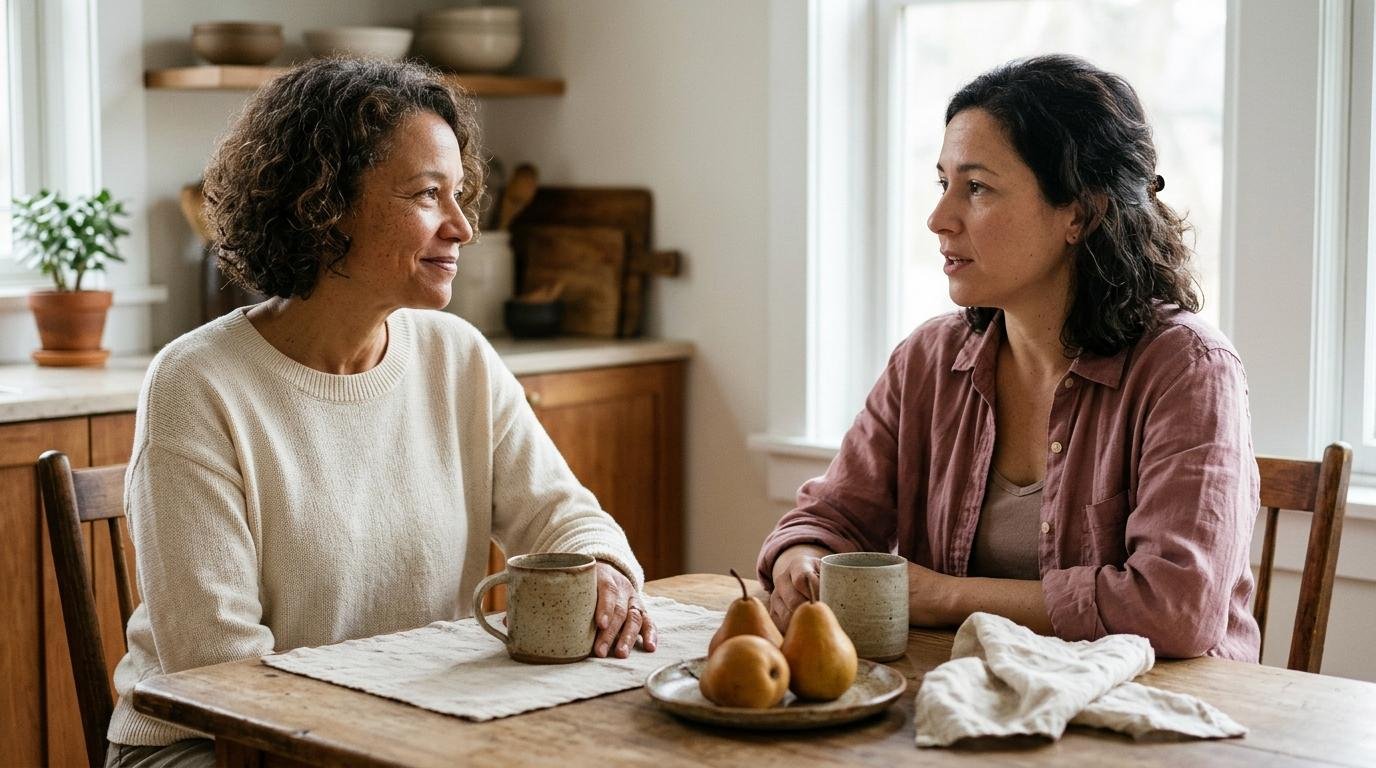
A direct thank-you can make gratitude specific to a person, not just a general feeling. Instead of “You’re the best,” try naming what they did and why it mattered: “Thank you for checking in after my appointment. I felt less alone walking home.” The detail shows that you noticed the care behind the gesture.
Greater Good Magazine’s account of the gratitude-letter study describes an activity in which participants wrote to someone who had helped them. Only a minority sent their letters; writing and sharing were not the same step in the exercise. For everyday life, that’s a useful reminder that you can decide what feels right. A short message, a spoken thank-you, or a private note you never send are all different ways to acknowledge what someone gave you.
Keep it uncomplicated. You don’t need to make a person responsible for your happiness or turn gratitude into a debt you must repay. A clear sentence can simply say, I saw what you did, and it mattered to me.
4. Practice Gratitude Without a Journal
If writing has started to feel like homework or it just isn’t your way, leave the notebook closed. The NIMH’s guidance offers two options: write a specific thing you appreciate, or replay it in your mind. The second one can take only a few seconds: silently name a moment while you brush your teeth, fold laundry, or settle into bed.
You could also record one short voice memo, tell someone thank you in person, or keep a small phrase in your notes app. None of these needs to become a new system. Choose the option that feels most natural in this season, and skip the tracking sheet if tracking makes the practice feel like another scorecard.
The goal is not to find the “best” gratitude exercise. It’s to give yourself a way to notice appreciation that doesn’t depend on stationery, a perfect prompt, or an audience. If a journal is comforting, use it. If not, your attention still counts.
Keep It Honest on Hard Days: Let Both Things Be True
On a difficult day, gratitude on hard days doesn’t have to mean searching for a bright side. You can name the hard thing plainly “I’m worried about this conversation” and, if it feels true, name one other thing too: “I appreciated my sister texting before it started.” The second sentence doesn’t undo the first. Both belong to the same day.
Greater Good Magazine makes the same important distinction in “Six Habits of Highly Grateful People”: appreciation does not remove real problems or require pretending they aren’t there. If you’ve lost someone, feel unsafe, or are facing a serious hardship, you do not owe anyone a lesson, a silver lining, or gratitude for what hurt you. It is enough to notice a source of support, a moment of ease, or nothing at all.
A useful prompt is: What is hard right now, and what, if anything, still feels steady or kind? If the answer to the second half is “I don’t know,” stop there. This isn’t a test you have to pass. Gratitude can be an invitation you return to when it feels honest, not a rule that tells you how to feel.
Make Gratitude Practices Easy to Return To
A practice is more likely to fit when it’s attached to a moment that already exists. Maybe you pause for one breath after turning off the kettle, or think of one thing you appreciate when you get into bed. You don’t need a reminder alarm, a public commitment, or an unbroken streak.
The NIMH notes that self-care looks different for everyone and may take trial and error to find what works for you. You can use that flexibility here: keep the version that feels sincere, change it when it stops fitting, and let a missed day be just a missed day. A small gratitude habit should make room for your life, not compete with it.
If you want a gentle starting point, choose one cue you already meet most days: a first sip, a familiar walk, or the moment you set your phone down. Let it remind you to notice something, not to manufacture a feeling. There’s no perfect schedule to catch up with.
Name One Thing from Today
You don’t have to finish this article with a long list. If something comes to mind, name one detail from today that you appreciated: a person, a small comfort, a moment of quiet, or a kindness you noticed. Let it be specific enough to feel real and small enough to ask nothing more of you.
And if today is too hard, you can leave the question open. Gratitude doesn’t need to deny what’s true. It can wait until noticing one good thing feels like your own choice.
