Fall self-care habits don’t have to stay the same size to stay part of your life. When calendars fill, you can keep the heart of a ritual and let the time it takes get smaller. The National Institute of Mental Health recommends making room for enjoyable, relaxing activities and notes that self-care looks different for everyone.
Fall has a way of asking more of us, shorter days, fuller calendars, and that quiet pressure to suddenly be “productive” the second the season shifts. I used to let self-care be the first thing to slide when life picked up. This year, I’m trying something different: deciding ahead of time which small rituals I’m keeping, even when I can’t give them as much time.
These are not rules for creating a perfect morning or a new seasonal routine. They’re small ways to keep a little space for yourself: a slower start, a warm drink, a kind no, and a few quiet minutes of rest. If life is getting fuller for you too, you might find one small habit worth keeping in a smaller form.
Key Takeaways
NIMH recommends making time for enjoyable, relaxing activities and notes that self-care looks different for everyone, useful context for these flexible reminders.
Shorten, don’t abandon: A twenty-minute morning ritual can become five on a fuller day.
Keep ordinary comforts ordinary: A warm drink can be a pause without an elaborate setup.
Use a kind, clear no: One honest sentence can be enough; a long defense isn’t required.
Let small rest count as a pause: Ten quiet minutes can fit a full week without replacing longer rest when you need it.
Fall Self-Care Habits Can Shrink Without Disappearing
A routine that only works on spacious, unhurried days may be hard to reach for when a week fills up. That doesn’t mean the ritual has to vanish. It may simply need a smaller version for the days when there isn’t room for the whole thing.
The National Institute of Mental Health suggests scheduling time for relaxing activities you enjoy, while also emphasizing that self-care looks different for each person. That leaves room to ask a gentler question than “How do I fit in the perfect routine?” Try: What is the smallest version of this that still feels like care to me?
For me, a slow morning can become five minutes instead of twenty. A full rest day can become ten quiet minutes. Those shorter versions don’t need to replace the longer ones; they give me another way to stay connected to what I value when time is limited. There is no required number of minutes, and no need to keep a ritual that doesn’t feel helpful anymore.
1. Keep the Slow Morning, Just Make It Five Minutes
I don’t need an hour-long morning routine to feel like myself. I just need the first twenty minutes to be mine. On fuller days, that might mean five minutes instead of twenty. The point isn’t the length; it’s that I still leave a little space for the kind of morning I want.
That space doesn’t have to hold a whole checklist. Maybe it means sitting before opening your inbox, taking a few quiet breaths, or letting yourself wake up without immediately rushing to the next thing. Choose the part of your morning you’d miss most if it disappeared, then decide what its five-minute version could be. If five minutes doesn’t fit one day, make the moment smaller still or try again when you can.
NIMH includes scheduling enjoyable, relaxing activities among its general self-care suggestions. That isn’t a prescription for an exact morning routine; it’s a reminder that something you enjoy can have a place in ordinary life. You don’t have to earn that space by finishing everything else first.
A gentle way to start: pick one morning habit you care about and make it easy to begin. Leave your journal where you can reach it, or set your cup out the night before not to create a flawless system, but to remove one small obstacle. When you finish, let that be enough. You kept the part that mattered without demanding that the whole morning stay unchanged.

2. Let a Warm Drink Be a Pause, Not Another Task
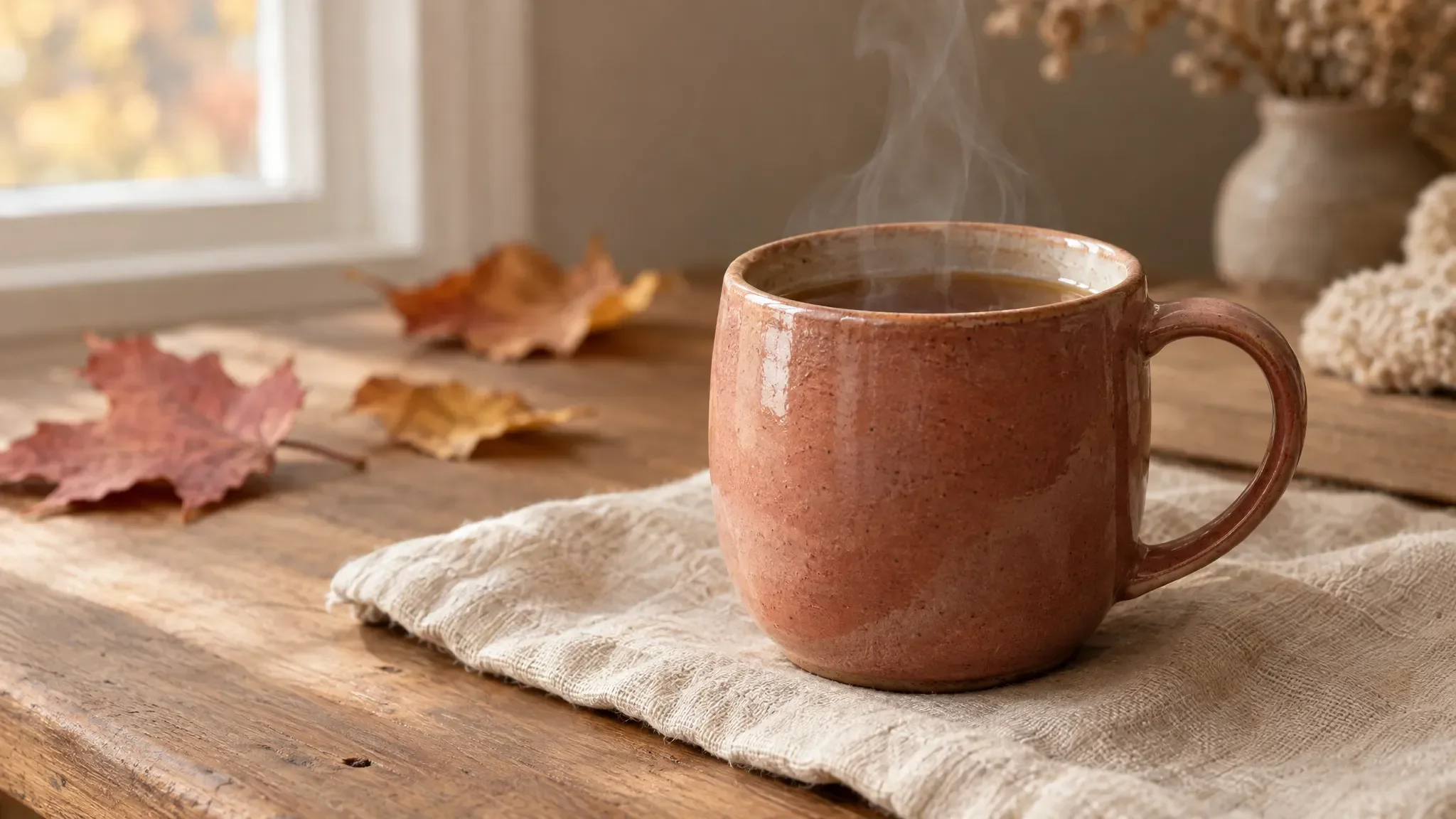
Something about a slow cup of tea or coffee marks the start of the day differently than drinking it while already working. I’m keeping this one close, even if it means the drink goes a little lukewarm because I let myself sit with it for a minute first.
The ritual doesn’t need special tea, a beautiful tray, or a quiet hour. It can be as simple as holding the mug, taking the first sip before opening a screen, and noticing that you’ve paused. If mornings are too rushed, perhaps the moment belongs after lunch or in the evening instead. The point is not to copy someone else’s version of a cozy routine; it’s to keep an ordinary pleasure that feels like yours.
NIMH’s self-care guidance includes making time for relaxing activities you enjoy, such as reading, listening to music, or spending time in nature. A warm drink is my own small example, not a health treatment or a promise that one cup changes the day. It’s simply a familiar cue to sit for a moment rather than moving through the morning on autopilot.
If you want to try it, let the first few sips be the ritual. Set the cup down when you need to, return to it if you can, and don’t turn finishing it at the “right” temperature into another expectation. Even an imperfect pause can still be a pause.
3. Say No Without Writing a Defense
Fall can fill up quickly with plans, favors, and “just one more thing.” I’m practicing saying no without attaching a three-sentence justification. A simple “I can’t make that one, but thank you for thinking of me” is enough.
A short answer can feel difficult when you’re used to softening every boundary with an apology or a detailed explanation. But declining one plan doesn’t mean you don’t care about the person who invited you. It can simply mean you’re paying attention to what you have room for. And if you genuinely want to suggest another time, you can; you don’t have to offer an alternative to make your no kind.
NIMH’s guidance on caring for your mental health recommends setting priorities deciding what needs attention now and what can wait and learning to say no to new tasks when you’re taking on too much. That’s general guidance, not a rule to turn down every invitation. It does offer a useful pause before answering: Is this a yes I have room for, or a yes I’m trying to explain myself into?
If you tend to add a whole paragraph after declining, try writing one warm sentence ahead of time. Keep it in your notes if that helps. You can be considerate without presenting a case for why your time or energy matters. A clear, gentle answer is enough; the other person can feel disappointed, and you can still have made a thoughtful choice.
4. Let Rest Look Smaller, Not Disappear
On fuller weeks, rest may not look like a whole lazy Sunday. Sometimes it might be ten quiet minutes with no phone. I’m choosing to let that count as a small pocket of rest instead of waiting for a “real” rest day that may not come for weeks.
A short pause is not the same as a day off, and it doesn’t have to carry the weight of one. It’s a backup for the weeks when there’s less room not proof that you no longer need a longer break. Maybe your ten minutes mean a quiet walk, sitting without a screen, or stretching gently. Maybe another kind of pause feels better to you. The right version is the one that feels restful rather than like another thing you have to complete.
NIMH suggests making time for relaxing activities you enjoy and offers examples like reading, music, nature, and low-stress hobbies. It doesn’t prescribe a duration. That leaves space to notice what kind of rest is actually available today and what you might need when there is more room.
If it helps, decide on one small option before the busiest part of the week arrives: “When I have ten minutes, I’ll step outside,” or “I’ll sit with no phone after dinner.” Think of it as a gentle invitation, not a promise you can fail. If you miss it, you haven’t lost the habit; you can return when the moment opens again.

Make Fall Self-Care Habits Easier to Keep on Full Weeks
You don’t need to carry every ritual into fall at its full size. Choose one habit to protect first. NIMH’s advice to set priorities and decide what can wait is a helpful reminder that care can begin with choosing, not adding.
Try this small check-in:
Name the habit you’d miss. A quiet morning? A warm drink without your inbox? A few minutes alone?
Find its smallest kind version. Five minutes instead of twenty; one sentence instead of an explanation; ten quiet minutes instead of waiting for a whole free day.
Choose a likely moment. Link it to a part of the day that already exists, but leave room for life to shift the plan.
The goal isn’t to make a new promise you must keep perfectly. It’s to know what you can reach for when your calendar gets crowded. People discussing self-care in online communities often describe elaborate routines starting to feel like another chore; that’s an anecdotal signal, not research, but it echoes why a smaller plan may feel kinder. If your chosen habit stops feeling helpful, you can change it. Self-care is meant to meet you where you are not keep you tied to an old routine.
How do I keep up with self-care during a busy season?
Choose one small habit you genuinely value and decide on a shorter version for fuller days. NIMH recommends prioritizing what needs attention now, what can wait, and saying no when you’re taking on too much. Your routine can flex with the week instead of disappearing when it changes.
Does self-care have to be a long or elaborate routine?
No. It can be an ordinary activity you enjoy, made easier to reach: a few minutes of quiet, a warm drink, or a short pause outdoors. NIMH notes that self-care looks different for everyone and encourages people to find activities that suit them. There’s no required aesthetic or exact duration.
What’s a simple way to protect rest when my schedule is full?
Pick one small kind of rest you can turn to, such as ten quiet minutes without your phone, a walk, or a little stretching. Let it be an additional pause, not a substitute for a longer break when you need one. You don’t have to wait for an entirely free day to rest at all.
How can I say no to plans without feeling guilty?
Try one warm, honest sentence: “I can’t make that one, but thank you for thinking of me.” NIMH includes saying no to new tasks when you’re taking on too much among its self-care suggestions. You can be kind and clear without explaining every detail or offering an alternative.
Keep One Small Promise to Yourself
You don’t have to decide on every habit you’ll keep for the whole season. Just choose one small thing you’d be sad to lose, and decide what it can look like on a fuller day. Maybe that is five minutes of a morning you used to give twenty, a few unrushed sips, one clear no, or a quiet pause before the next task. NIMH also recommends setting priorities and learning to say no when you’re taking on too much.
Then let the rest of the week be real. Some days will have room for more; some won’t. A shorter ritual is not a test of how well you’re doing, and skipping it once doesn’t mean you have to start over. You’re allowed to adjust the shape of your care as life changes.
If fall is asking more of you, let your first step be small enough to meet you where you are. What is one gentle habit you’d like to protect?
